


Choosing the right monitor panel plays a crucial role in screen performance, image quality, and overall user experience. Each panel technology is designed with specific strengths, making it important to match the panel type to its intended use, whether for work, gaming, or media consumption.
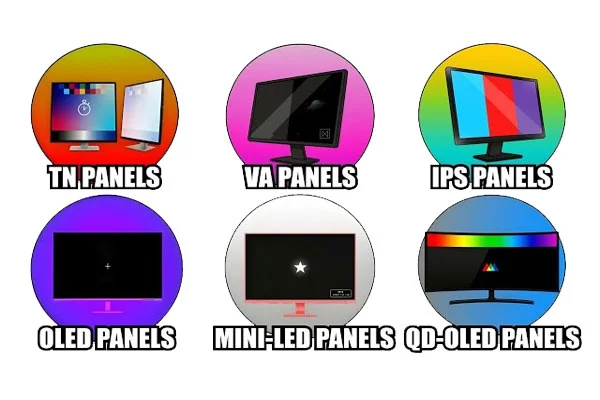
Below, we present a clear and practical description of the most common types of monitor panels available today.
IPS (In-Plane Switching Panel)
- Accurate and consistent color reproduction
- Wide viewing angles
- Uniform brightness across the entire screen.
Limitations:
- Lower contrast than VA panels.
- Cost slightly higher than TN panels.
√ IPS panels are ideal for users who prioritize color accuracy and consistency.
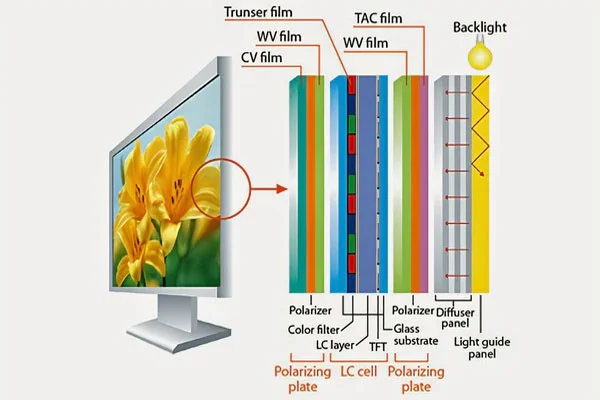
TN (Twisted Nematic Panel)
Best monitor panels for: Competitive games and high-speed applications
Main advantages
- Extremely fast response times
- Support for high refresh rates.
- Solution with excellent cost-benefit ratio.
Limitations:
Limited color performance
Narrow viewing angles
Less vibrant visuals
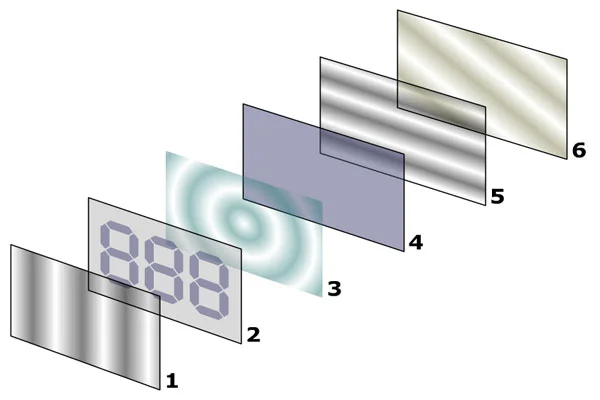
VA (Vertical Alignment Panel)
Best monitor panels for: Movies, media consumption, and immersive games.
Main advantages:
- High contrast with deeper blacks
- Improved visual depth in dark scenes.
- Balanced overall performance
Limitations:
- Slower response time
- Viewing angles are not as wide as those of IPS panels.
√ VA panels are ideal for users who value contrast and cinematic visuals.
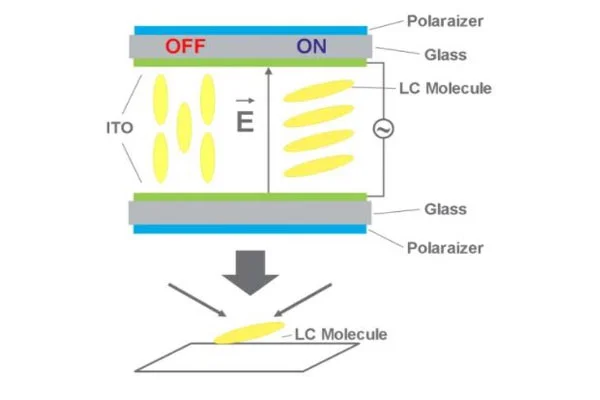
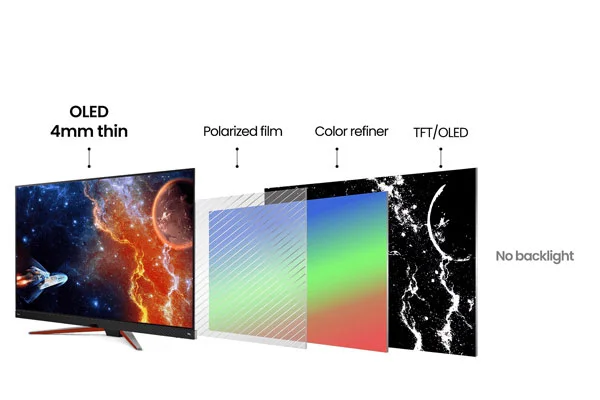
OLED (Organic Light-Emitting Diode Panel)
Best monitor panels for: Premium monitors, games and creative applications
Main advantages:
True blacks with pixel-level lighting.
Infinite contrast ratio
Ultra-fast response time
Excellent color reproduction.
Limitations:
Higher cost
Possible image retention after long periods.
√ OLED panels offer high-level visual performance and sharpness.
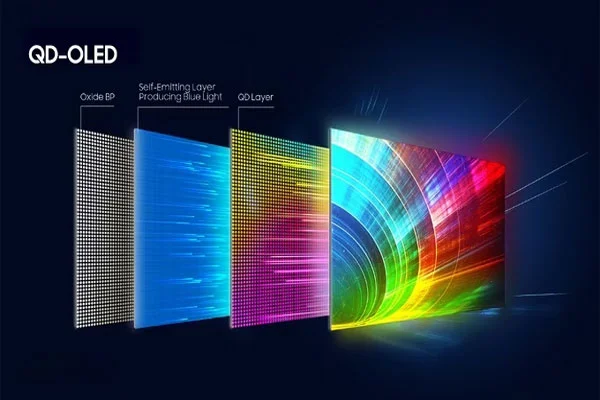
QD-OLED (Quantum Dot OLED Panel)
Best monitor panels for: High-quality games, professional content creation, and advanced display settings.
Main advantages:
- It combines OLED contrast with quantum dot color enhancement (QD-OLED).
- Greater brightness than traditional OLED.
- More vivid and accurate color reproduction
- Wide range of colors and greater efficiency
Limitations:
- Premium price
- Still relatively new to the market.
√ QD-OLED panels offer enhanced brightness and color performance while maintaining the deep blacks of OLED.
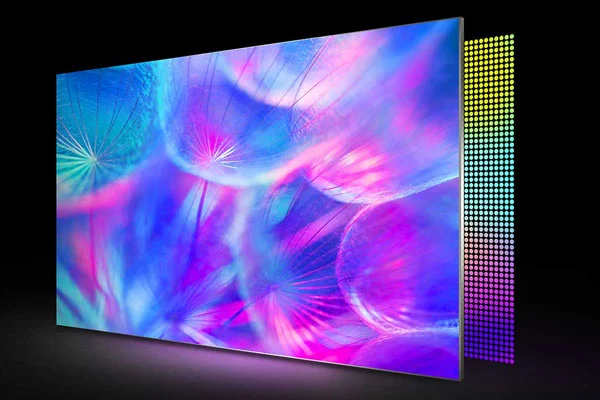
Mini LED Panel
Best monitor panels for: High-quality games, professional content creation, and advanced display settings.
Main advantages:
- It combines OLED contrast with quantum dot color enhancement (QD-OLED).
- Greater brightness than traditional OLED.
- More vivid and accurate color reproduction
- Wide range of colors and greater efficiency
Limitations:
- Premium price
- Still relatively new to the market.
√ QD-OLED panels offer enhanced brightness and color performance while maintaining the deep blacks of OLED.
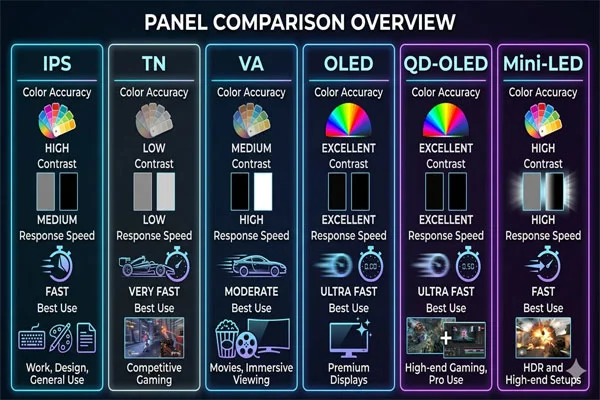
Overview of panel comparison
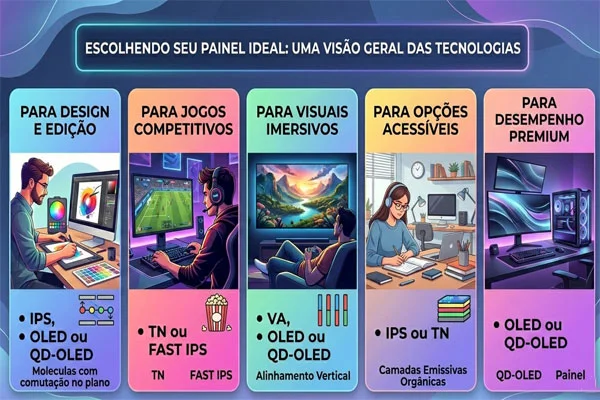
How to choose the right panel?
Final considerations
There is no single panel that meets all requirements. Each technology is designed to offer specific advantages:
- IPS prioritizes color accuracy.
- TN prioritizes speed.
- VA enhances contrast.
- OLED offers superior image quality.
- QD-OLED improves brightness and color performance.
- Mini-LED enhances HDR and brightness.
Choosing the right panel depends on your application, your performance expectations, and your budget.