


What is a diode? A clear and practical guide.
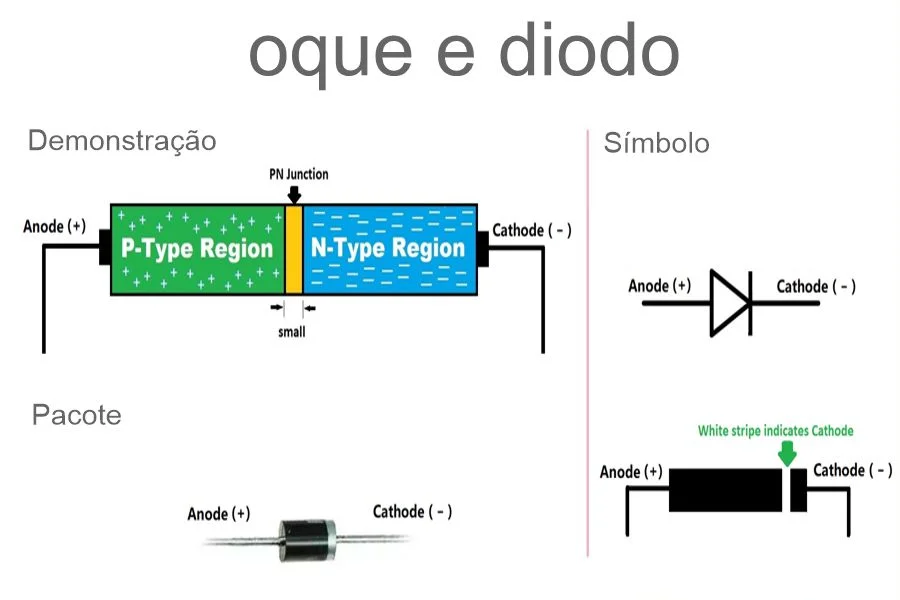
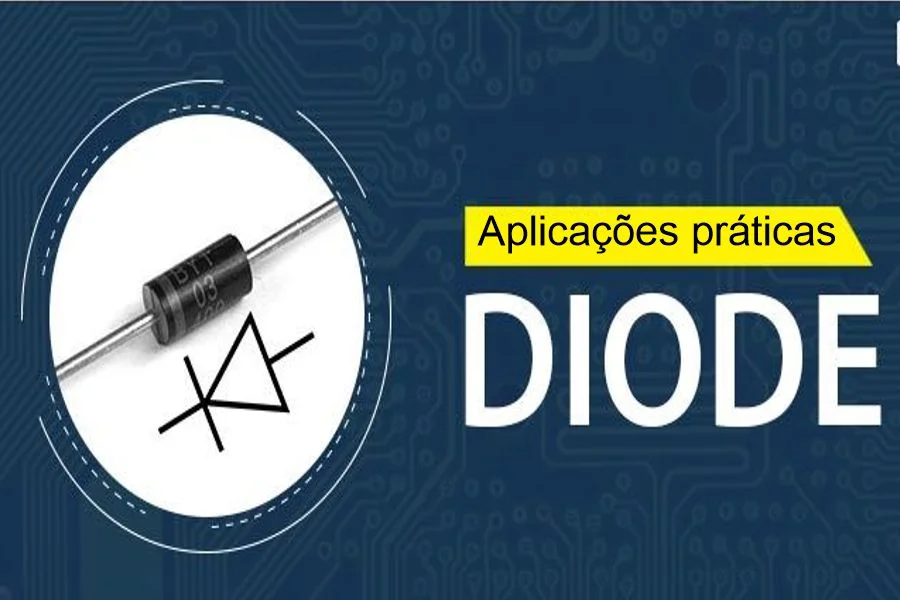
What is a diode? A diode is a small electronic component that allows electric current to flow primarily in one direction. You can think of it as a one-way valve for electricity. This unique characteristic makes diodes useful in many circuits.
1. Basic idea and how diodes work
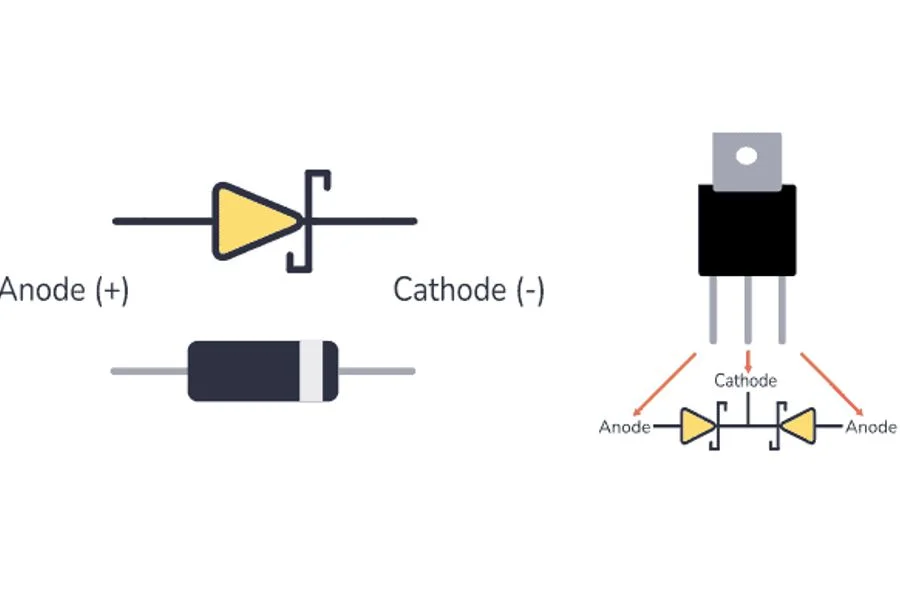
A diode has two terminals: the anode and the cathode. When a positive voltage is applied to the anode and a lower voltage to the cathode, the diode conducts current. In reverse polarity, it blocks the passage of current.
This happens because a diode contains a PN junction. One side is doped to have extra electrons (N-type). The other side is doped to have extra holes (P-type). At the junction, a thin depletion region forms. This region creates a barrier that prevents current from passing through it, unless the applied voltage is high enough to drive charge carriers across it.
2. Main electrical terms (summarized)
- Forward voltage (Vf): The voltage drop when the diode conducts (≈ 0.7V for silicon)
- Reverse breakdown voltage (Vbr): The reverse voltage at which the diode begins to conduct in the reverse direction.
- Maximum direct current (If): the maximum safe current that the diode can withstand.
- Reverse leakage current (Ir): A small current flows when the diode is reverse biased.
Common types of diodes and their functions
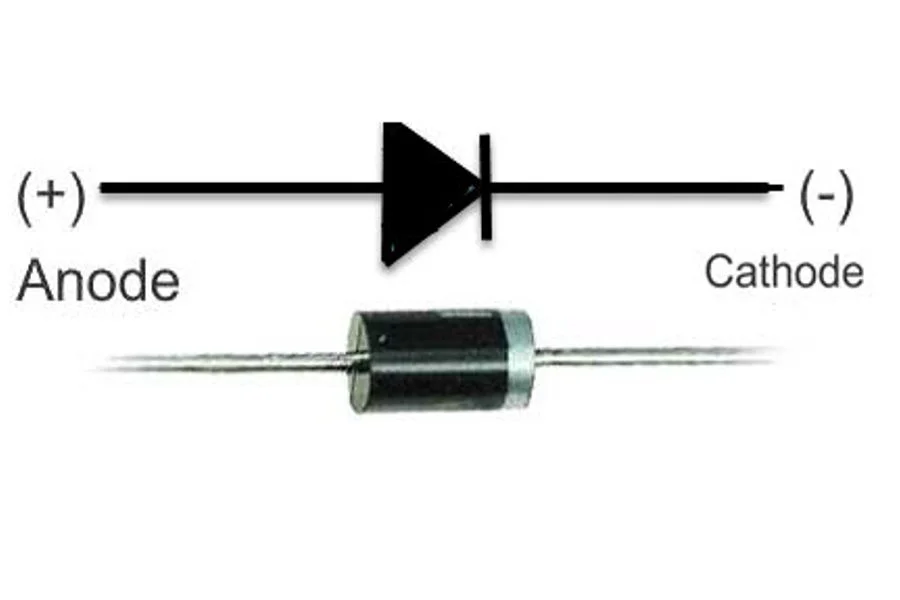
1. Rectifier diode:
It converts alternating current into direct current. You can find this in
2. Light Emitting Diode
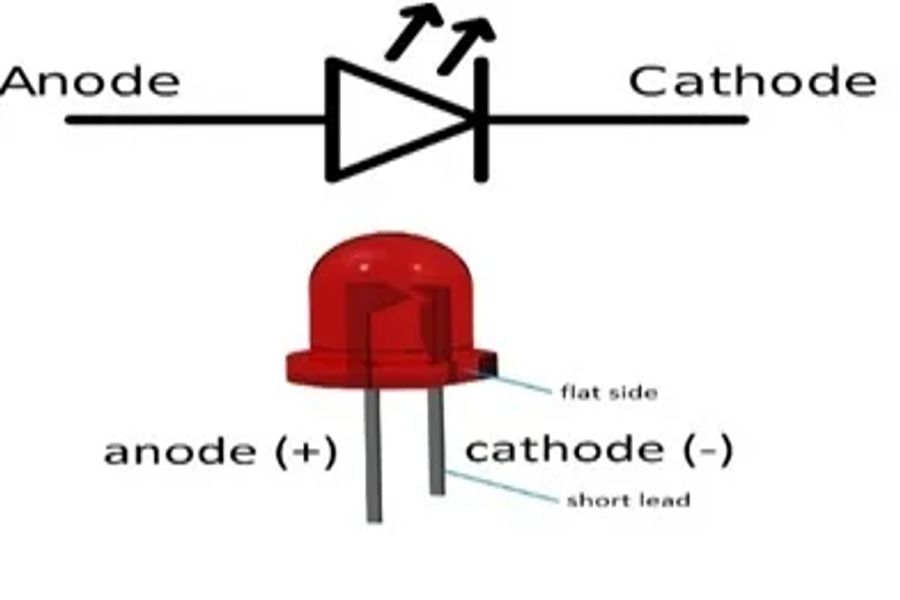
LEDs emit light when an electric current passes through them. They are used in displays, indicators, and lighting systems.
3. Zener Diode
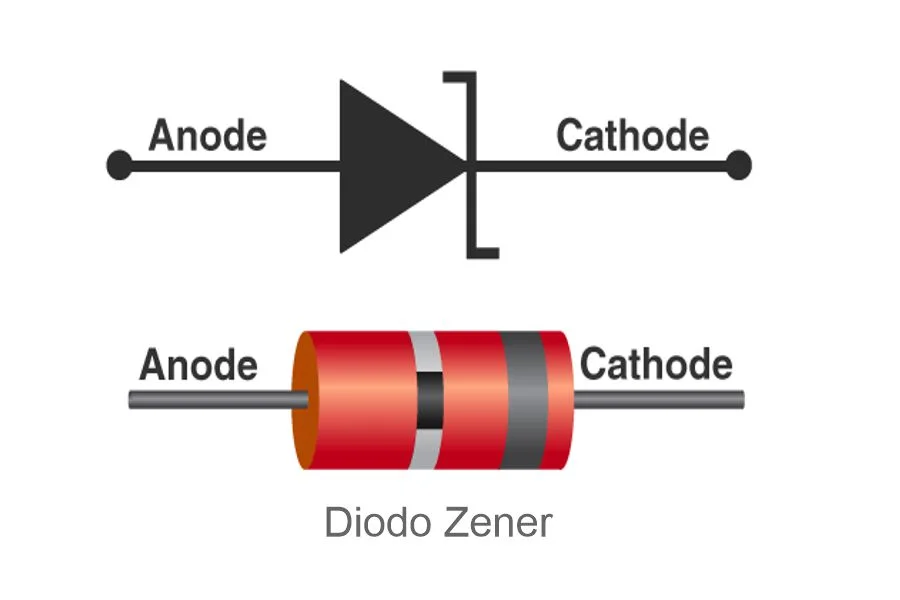
Designed to operate in safe reverse break mode, and used for voltage regulation and protection.
4. Schottky Diode
Designed to operate in safe reverse break mode, and used for voltage regulation and protection.
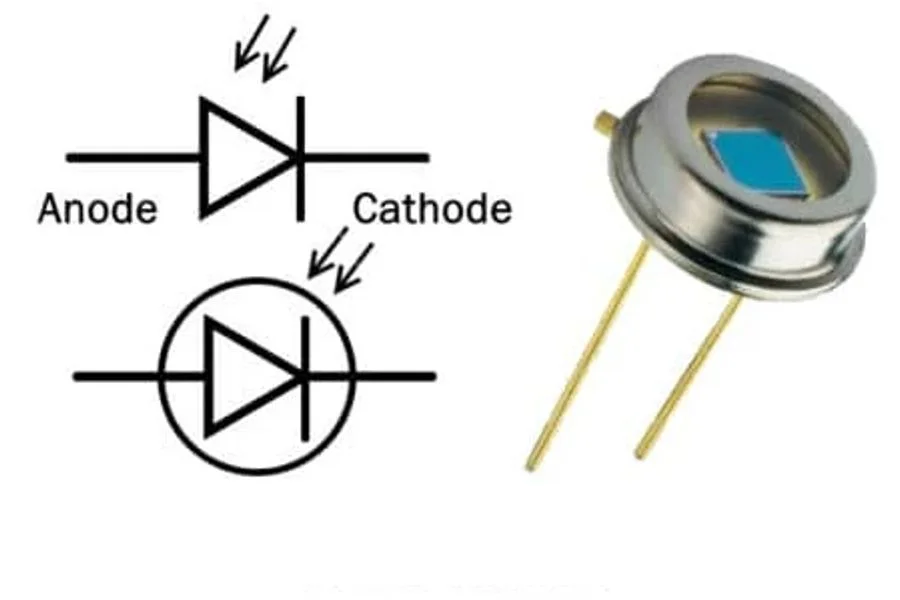
5. Photodiode
It converts light into electrical current, and is commonly used in radio frequency tuning circuits.
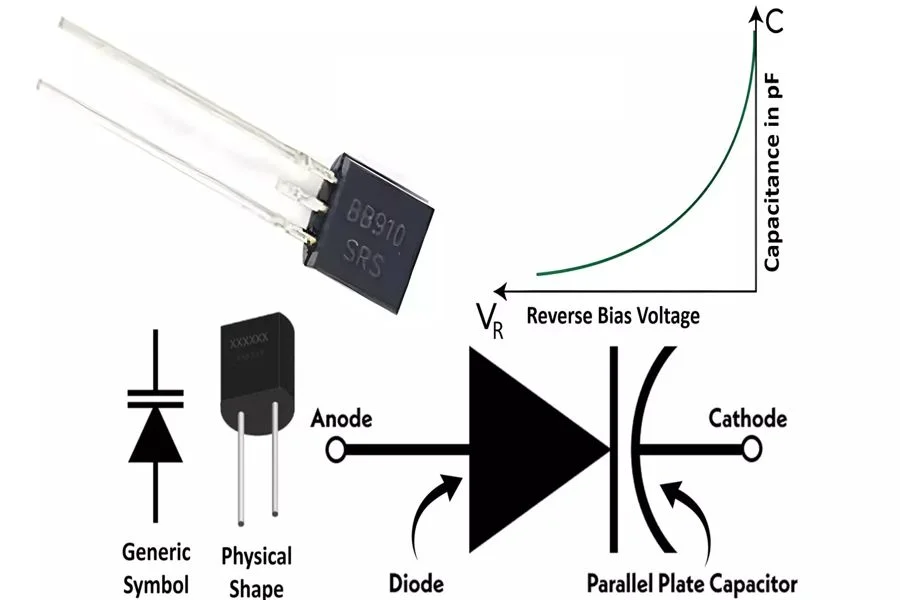
6. Varactor Diode
It converts light into electrical current, and is commonly used in radio frequency tuning circuits.
Practical applications
- Cell phone chargers and power adapters use rectifier diodes to convert alternating current into direct current.
- LEDs light up status indicators and displays.
- Zener diodes protect sensitive electronic components against voltage spikes.
- Schottky diodes are used in switched-mode power supplies for increased efficiency.
- Photodiodes are found in remote controls, light meters, and optical receivers.
How do diodes behave on an IV curve?
Plot the graph of current as a function of voltage. In the forward bias region, an exceptional increase in current is observed as soon as the voltage exceeds the threshold (Vf). In the reverse bias region, the current is practically zero until it reaches the breakdown voltage. At the breakdown point, the current increases sharply, unless it is limited by a resistor or by the circuit design.
Materials and Modern Trends
Silicon is the standard material. Germanium was initially used due to its lower forward voltage drop, but it is less stable. Gallium arsenide (GaAs) and gallium nitride (GaN) perform specific functions: GaAs for optoelectronics and high-frequency applications; GaN and silicon carbide (SiC) for high-power, high-efficiency switching. These materials reduce losses and heating in power systems.
Simple circuits you can try.
- LED indicator: Diode + resistor in series + battery. Works as a visual test.
- Half-wave rectifier: A single diode converts alternating current pulses into pulsating direct current.
- Bridge rectifier: Four diodes provide full-wave rectified direct current from alternating current. Add a capacitor to smooth the output.
Safety and selection tips
- Check the maximum forward current and maximum reverse voltage for your circuit.
- Add a current-limiting resistor to the LEDs.
- Use heat sinks or choose a diode with a higher power rating when dealing with high currents.
- For switching applications, adjust the recovery time and forward voltage drop of the diode to the frequency and voltage of your circuit.
Quick troubleshooting checklist
- The diode has an open circuit in both directions: it is probably burned out.
- It conducts in both directions: it's probably short-circuited.
- High forward voltage or no light in an LED: check the series resistor or the wiring.
Final summary
A diode controls the direction of electric current. This simple rule allows for various applications: rectification, light emission, voltage reference, detection, and tuning. If you work with electronics, you will use diodes frequently. They are small, inexpensive, and efficient.