


Lux and Lumen: Understanding the relationship and conversions
When it comes to lighting, two frequently used terms are lux and lumen. While they may seem interchangeable, they refer to different aspects of light measurement. Understanding the differences and how to convert between them is essential for designing effective lighting systems in a variety of environments, from offices to outdoor spaces.
In this blog, we'll delve into the meaning of lux and lumens, the formulas for converting lumens to lux, and how these measurements relate to the brightness and intensity of your lighting. Let's clarify these concepts!
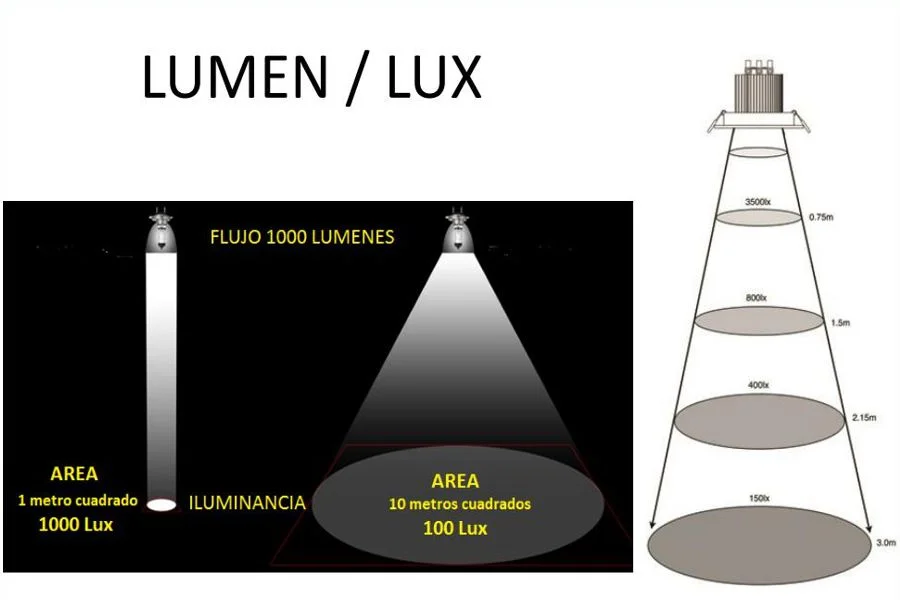
What is lumen?
The lumen (lm) is a unit of measurement used to quantify the total amount of visible light emitted by a source. It is a measure of luminous flux, which refers to the perceived power of light in a specific direction. The more lumens a light source produces, the brighter it appears to the human eye. This makes lumens a crucial factor in choosing LED lamps and luminaires for environments. residential and commercial.
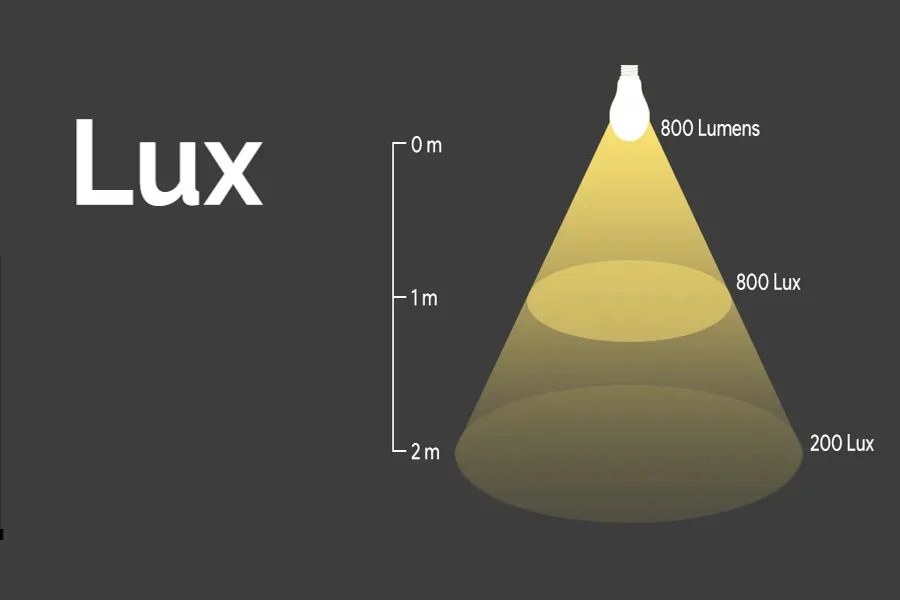
What is Lux?
On the other hand, lux is a unit of measurement that quantifies the intensity of light reaching a surface. While lumens measure the total luminous flux emitted by a source, lux measures how that light is distributed over an area. One lux is equivalent to one lumen per square meter (lm/m²). This means that lux takes into account both luminous flux and illuminated area, providing a more practical measure for lighting design.
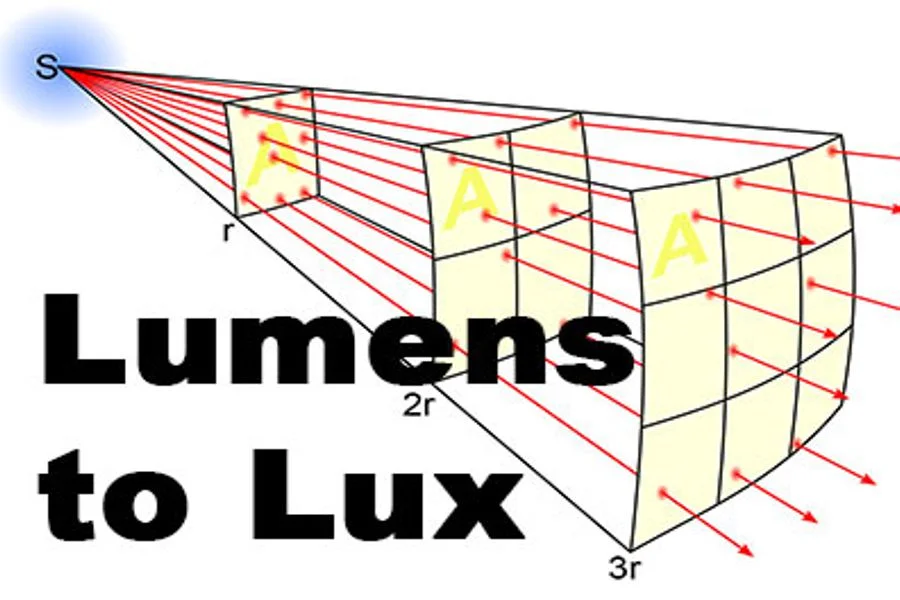
Converting lumens to lux: the formula
To convert lumens to lux, we use a simple formula:
Lux = Lumens / Area (m²)
This means that the total amount of light (in lumens) is divided by the area (in square meters) being illuminated. The result will indicate the lux level, which helps determine how well-lit a space is.
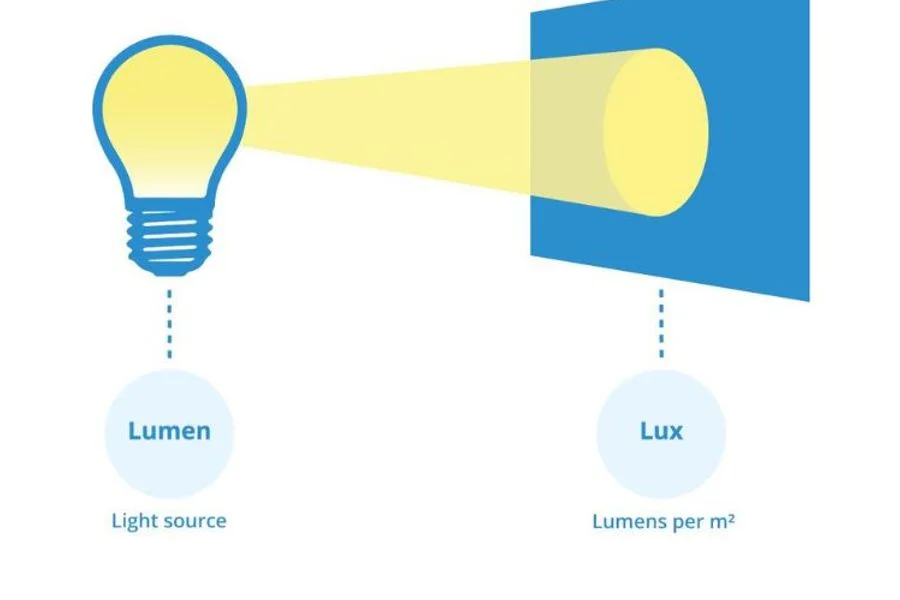
Converting Lux to Lumens
To do the reverse, you can convert lux to lumens using the following formula:
Lumens = Lux x Area (m²)
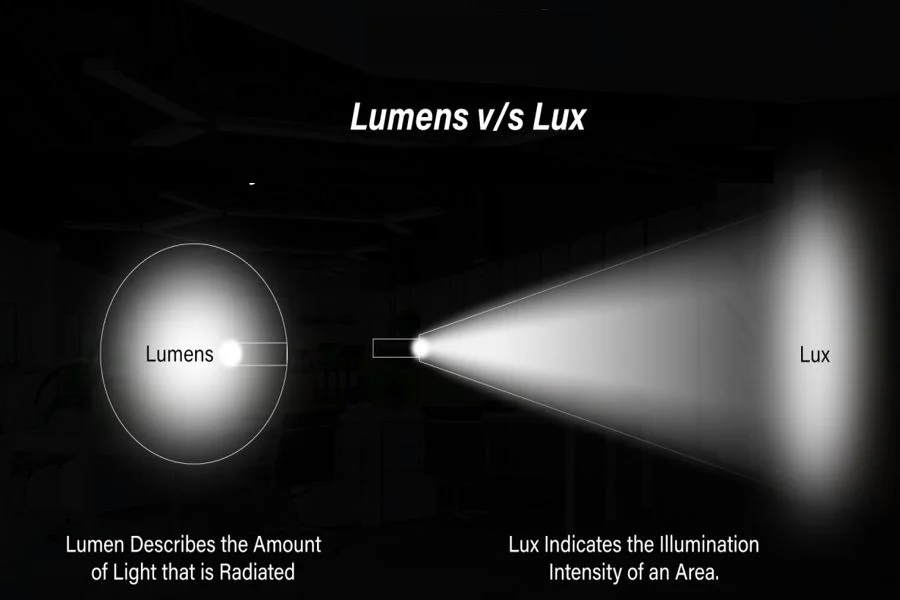
Lumens vs. Lux: What's the difference?
Although lumens and lux are both related to measuring light, they serve different purposes. Lumens refer to the total light output of a light source, while lux refers to the distribution of that light. Understanding this difference is important when designing lighting systems to meet specific needs.
For example, in a photography studio, light can be measured in lumens to determine the power of the light sources, while the intensity of the lighting on the object is measured in lux to ensure optimal exposure.
How to measure lux and lumens in practice.
- When selecting LED bulbs, the wattage is usually indicated in lumens (lm). Understanding how many lumens are needed for your environment is crucial to determining the appropriate LED brightness for your needs.
- Lux x Lumen: To determine the amount of light a specific area will receive, you can calculate the lux x lumen value by multiplying the lumens of the light source by the size of the area. This can help assess whether the light will be sufficient for the intended purpose.
- Lumen to Lux: Sometimes the goal is to achieve a specific lux level in a space. If you're dealing with lumens to lux, you're likely trying to ensure a light source provides sufficient illumination to meet your lighting objectives.
Common lighting scenarios
- Interior lighting: In indoor spaces, such as offices or classrooms, you may need around 300 to 500 lux for general lighting. For task lighting, such as reading, you may need 500 to 1000 lux.
- Outdoor lighting: For outdoor spaces, such as parking lots or streets, lux levels can range from 10 lux for general ambient lighting to 100 lux for areas requiring greater visibility.
- Calculating lumens to lux for LEDs: Calculating lumens to lux is particularly important when choosing LED lighting. LEDs are energy efficient, but the required brightness level will depend on the size of the area and the activities performed. It may be necessary to convert between the LED's lumen (lm) output and lux for a more accurate measurement.
Conclusion
Understanding the relationship between lux and lumens is fundamental for anyone working in lighting design, whether for homes, offices, or outdoor spaces. Knowing how to convert lm to lux and lux to lumens helps in making more informed decisions about the efficiency and comfort of ideal lighting.
By mastering these lighting measurements, you can create brighter and more energy-efficient environments tailored to specific activities. Understanding the nuances of lumen-to-lux, lm LED, and lux-to-lumens conversions is a fundamental step in achieving the perfect lighting setup for any space.