


Understanding SMD LEDs: A Complete Guide
Technology LED SMD It has rapidly transformed the lighting industry, offering a more efficient, durable, and versatile solution compared to traditional lighting options. One of the most common types of LEDs used today is the SMD LED, which has revolutionized the way we think about lighting.
In this blog, we will explore the definition of SMD, The meaning of SMD and how the surface-mounted device LEDs (SMD) They illuminate homes, offices, and large facilities.
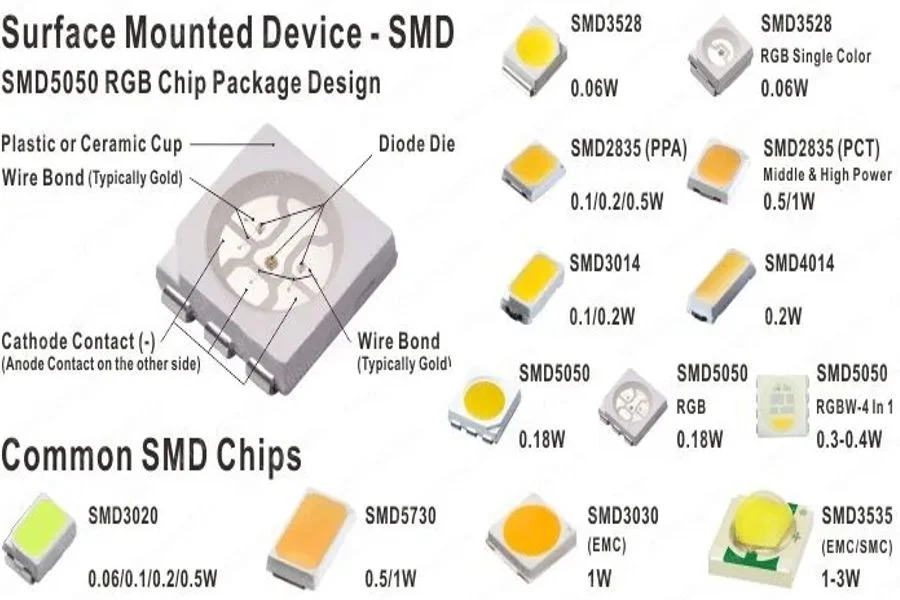
Definition of SMD
To define SMD clearly, SMD stands for Surface Mount Device. It is a type of electronic component mounted directly onto the surface of a printed circuit board (PCB) without the need to drill holes. This design allows for more efficient and compact electronic assemblies. SMD LEDs are manufactured using this method, resulting in a smaller, brighter, and more energy-efficient light source.

SMD Meaning: Why is this important?
The significance of SMD becomes clear when we observe how this technology has transformed LEDs. Compared to traditional LEDs with insertion terminals, SMD LEDs utilize a flat, compact form factor that allows for greater brightness, lower power consumption, and longer lifespan. Surface-mount device LEDs (SMDs) have become the standard in many electronic devices, from your smartphone screen to industrial machinery, thanks to their robustness and stability.
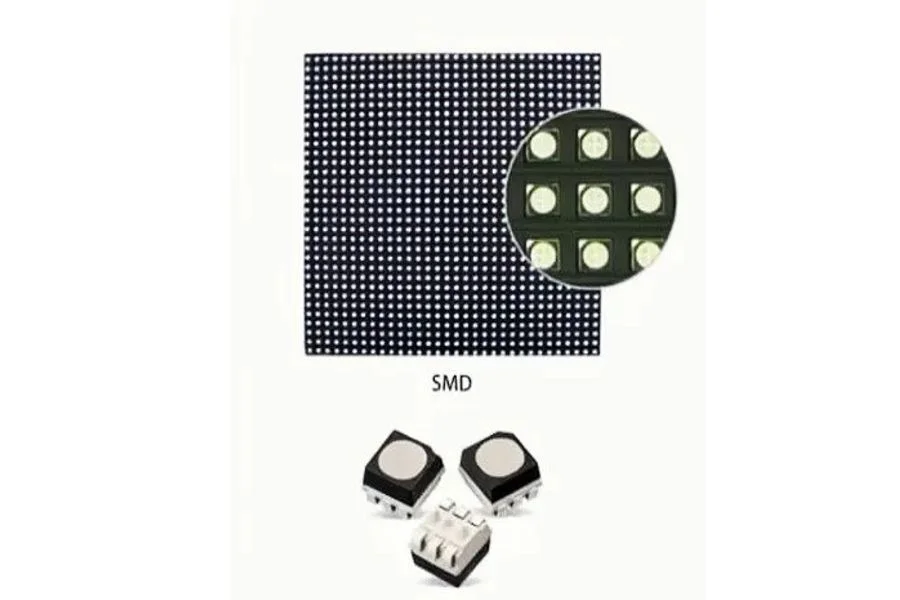
SMD LED type
There are different types of SMD LEDs available, each designed to meet specific requirements for brightness, efficiency, and size. Here are the most common:
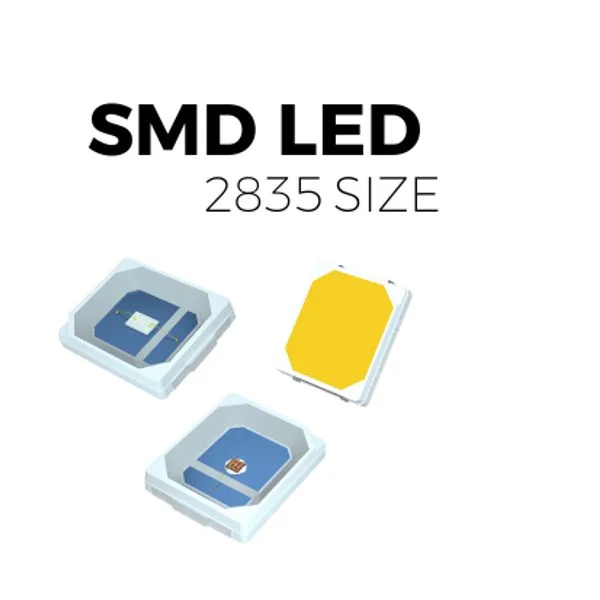
SMD 2835
One of the most efficient SMD LED models, known for its high brightness and energy efficiency. Ideal for residential and commercial lighting.
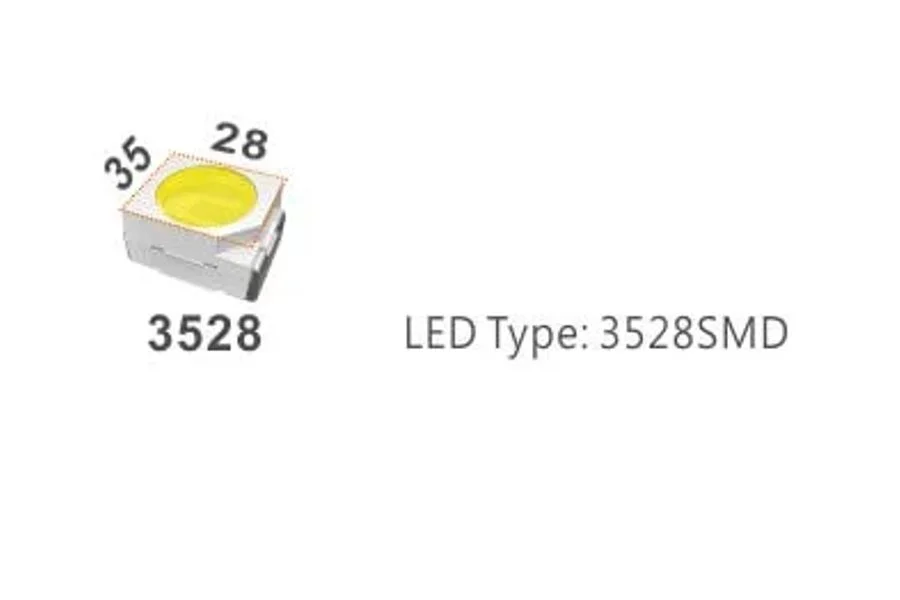
SMD 3528
Compact and low energy consumption, This type is perfect for accent lighting in indoor environments and decorative strips. It provides a softer, less intense glow.
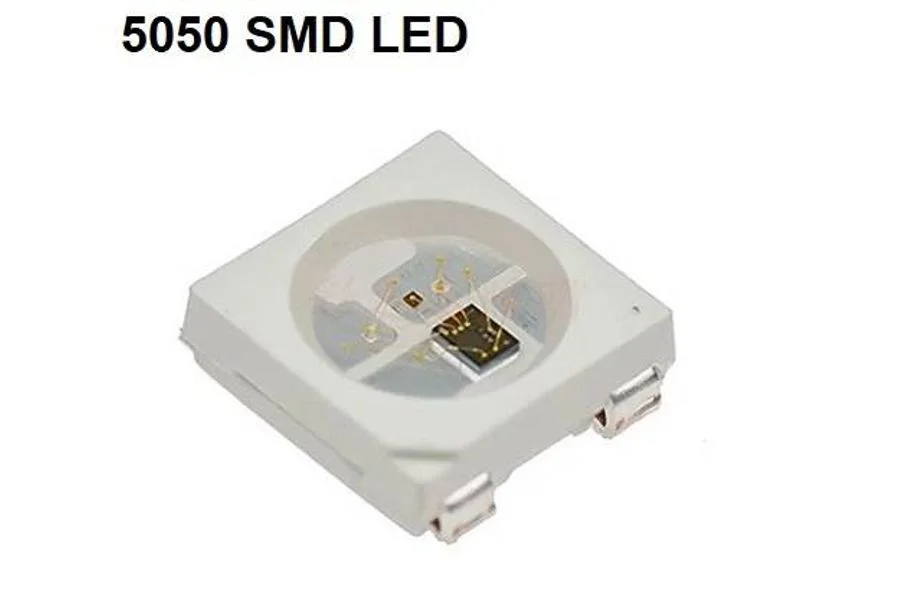
SMD 5050
A popular choice in RGB applications, capable of producing multiple colors on a single chip. Frequently used in LED strips, signage, and display lighting.
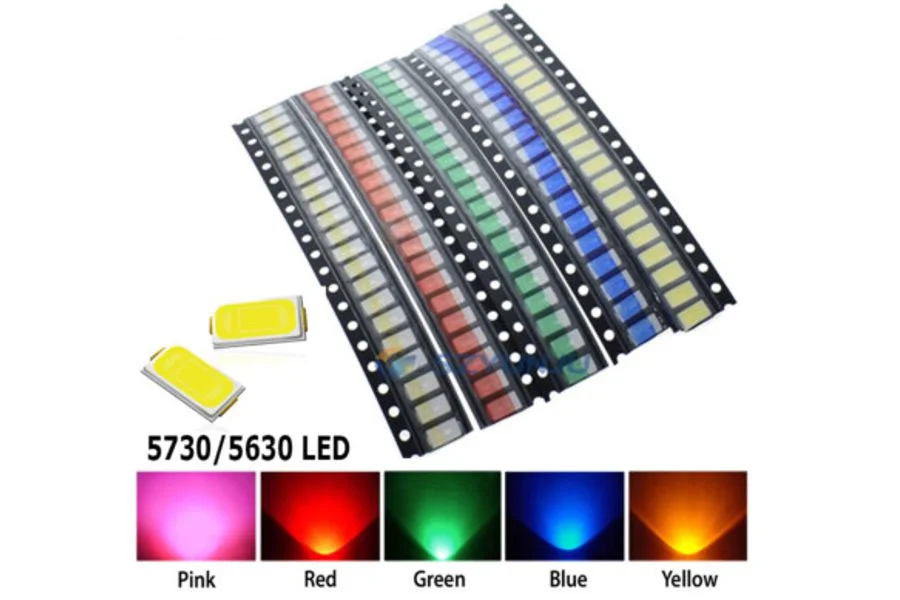
SMD 5630 / 5730
Surface-mount LEDs are brighter and more powerful than smaller types, and are used in high-power lighting fixtures such as floodlights or industrial lamps.
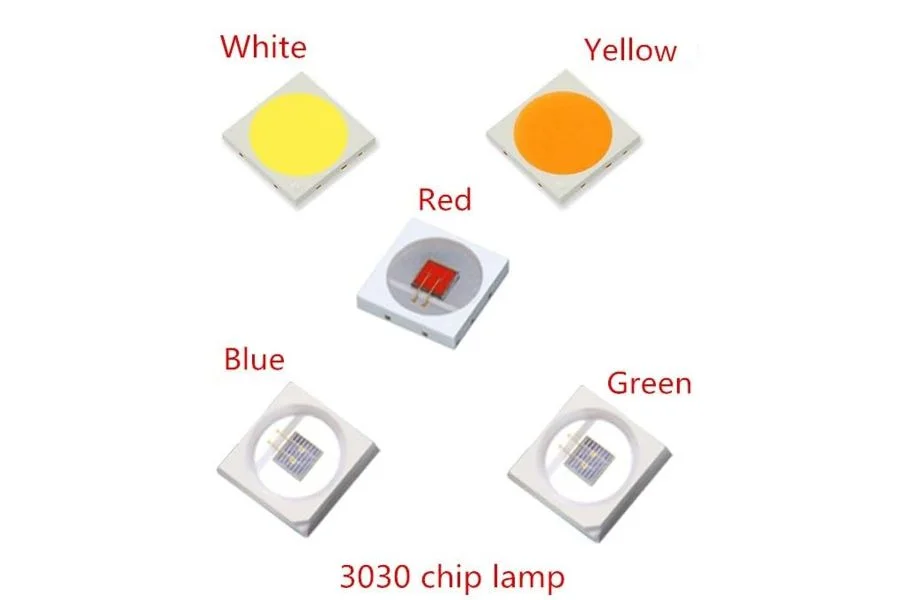
SMD 3030
Designed for outdoor displays and street lighting, this surface-mount LED offers excellent heat dissipation and stability.
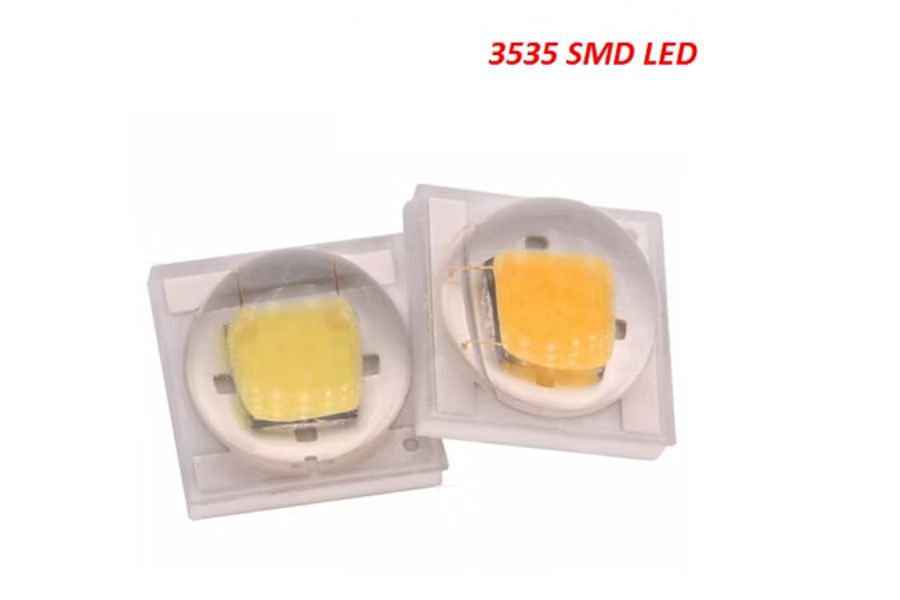
SMD 3535
Typically used in high-brightness applications, such as stage lighting or large advertising panels. It is known for its high lumen output and durability.
Each type of SMD LED varies in size and light intensity, but they all share the same advantages of efficiency, compact size, and long lifespan.
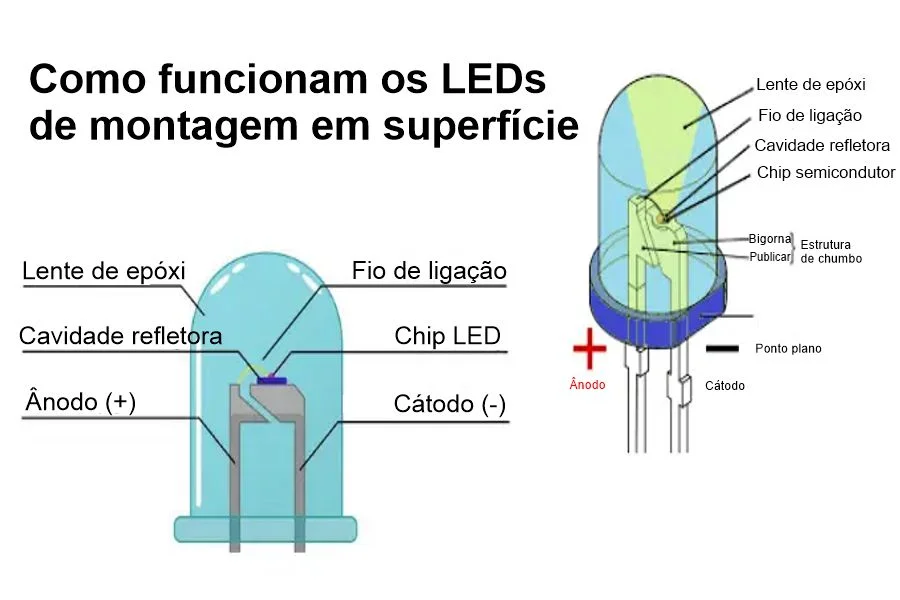
How do surface mount LEDs (SMDs) work?
Surface-mount LEDs (SMDs) emit light when an electric current passes through them. Mounted directly onto a printed circuit board (PCB), they reduce resistance and heat buildup. SMD LEDs can contain multiple diodes on a single chip, allowing for color mixing or greater light intensity in the same physical space.
Advantages of SMD LEDs
- Energy efficiency: Lower energy consumption with greater intensity. of shine.
- Compact design: Perfect for small electronic devices and decorative applications.
- Long service life: It works for thousands of hours without losing its shine.
- Versatility: Suitable for displays, vehicles, homes, and industrial lighting.
SMD LED Application
SMD LEDs are everywhere; from your cell phone screen to the large scoreboards in stadiums. Common applications include:
- TVs and monitors: For vivid and uniform backlighting.
- Automotive lighting: Used in headlights, brake lights, and instrument panels.
- Signage and billboards: SMD modules deliver bright, sharp images even in daylight.
- Smart devices: Telephones, tablets Wearable devices utilize surface-mounted LEDs for efficient illumination.
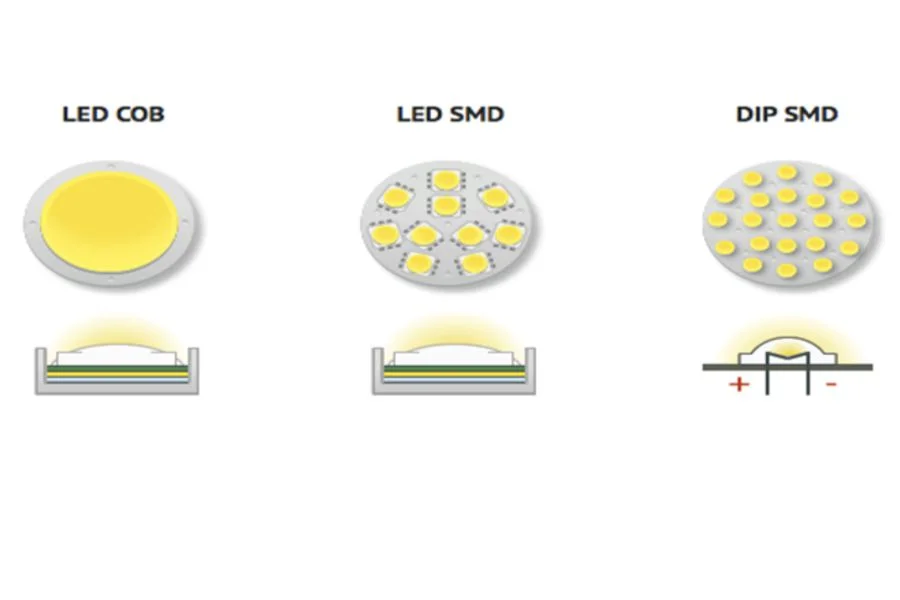
COB vs SMD vs DIPMain differences
To understand the place of SMD LEDs in modern lighting, it is helpful to compare them with COB and DIP LEDs.
| Appeal | DIP | SMD | COB |
| Structure | Single diode in rigid epoxy housing with wire terminals. | Multiple diodes mounted on the surface of the printed circuit board. | Many LED chips mounted directly onto a substrate. |
| Efficiency | Moderate | High | Very high |
| Shine | Low to medium | High | Very high and uniform output |
| Heat dissipation | Limited | Better | Excellent |
| Size | Voluminous | Compact | Compact, yet dense |
| Application | External signs, indicator lights | LED strips, displays, automotive | Spotlights, recessed lighting, industrial lighting |
- You DIP LEDs They are traditional, durable, and often used outdoors due to their robustness, but they are less efficient.
- You SMD LEDs They balance performance and flexibility, making them the most common in commercial and residential lighting.
- You COB LEDs They offer the highest brightness and are ideal for powerful and uniform lighting, such as spotlights and floodlights.
Conclusion
SMD LED lighting combines efficiency, brightness, and compact design, making it the standard for modern lighting. Understanding the definition of SMD, the meaning of SMD, and the types of SMD LEDs will help you choose the right lighting for your needs.
From surface-mount LEDs in your electronic devices to SMD LEDs in large screens, this technology continues to drive the world's most efficient and reliable lighting systems.