


When comparing screen technologies, IPS and LED are often confused. We work with many clients who initially considered IPS panels but later realized that LED screens were better suited to their needs.
We will explain the real differences in a simple, clear way, based on practical applications.
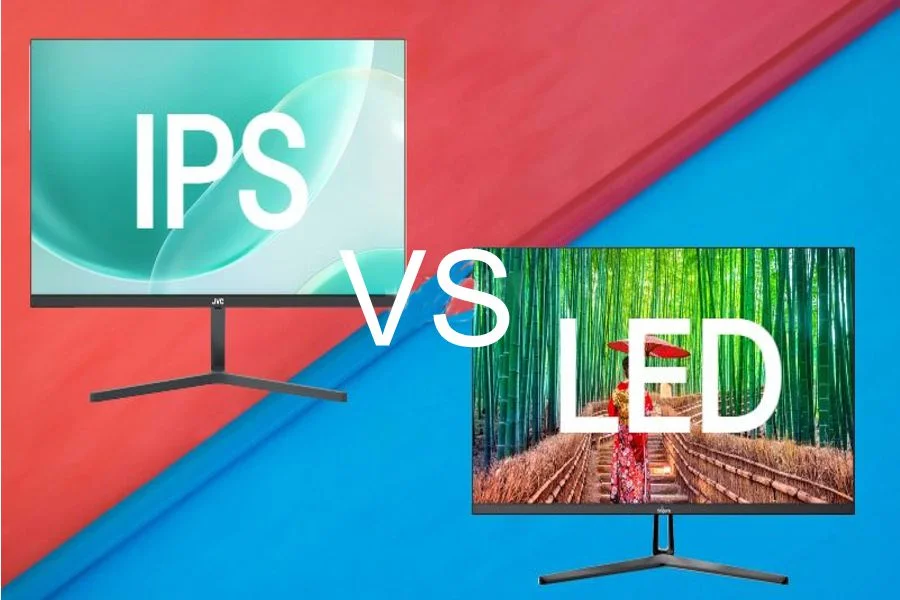
What is an IPS display?
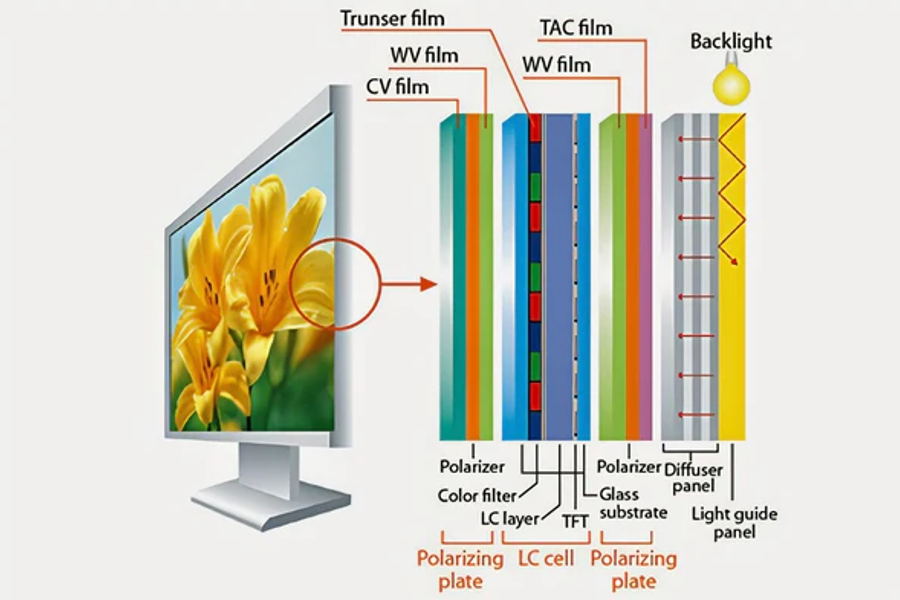
IPS (In-Plane Switching) is a type of LCD technology designed to improve color accuracy and viewing angles.
You will typically find IPS screens in:
- Computer monitors
- TVs
- Smartphones
- Internal digital displays
Strengths of IPS:
- Consistent and accurate colors
- Wide viewing angles (up to 178°)
- Sharp image quality for close-up viewing.
That said, IPS still relies on backlighting, which limits brightness and contrast, especially in brighter environments.
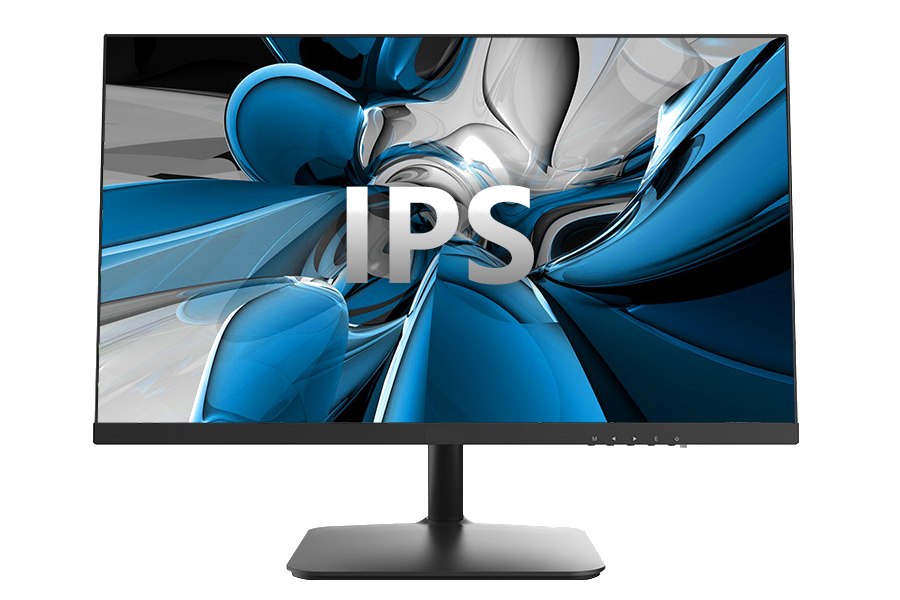
What is an LED display?
LED displays work differently. Instead of using a backlight, each pixel emits its own light.
This is what we manufacture.
LED displays are used in:
What makes LEDs powerful:
- High brightness (1,000 to 10,000 nits)
- Large, seamless screens
- Excellent visibility even in direct sunlight.
- Flexible design, such as curved displays or transparent
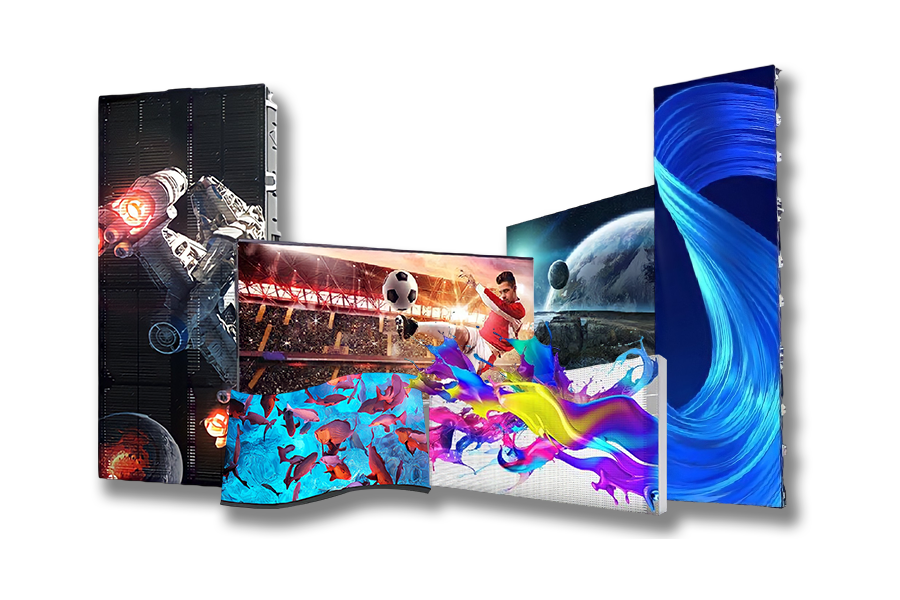
IPS vs LED: Key differences
Brightness and visibility
You IPS display They typically have a brightness between 250 and 600 nits, which is ideal for indoor environments.
You LED displays They go far beyond that, making them clearly visible even in outdoor environments.
♦ If your monitor needs to stand out in brightly lit areas, LED is the best option.
Screen size and scalability
You IPS panels They have a fixed size and cannot be resized without visible borders.
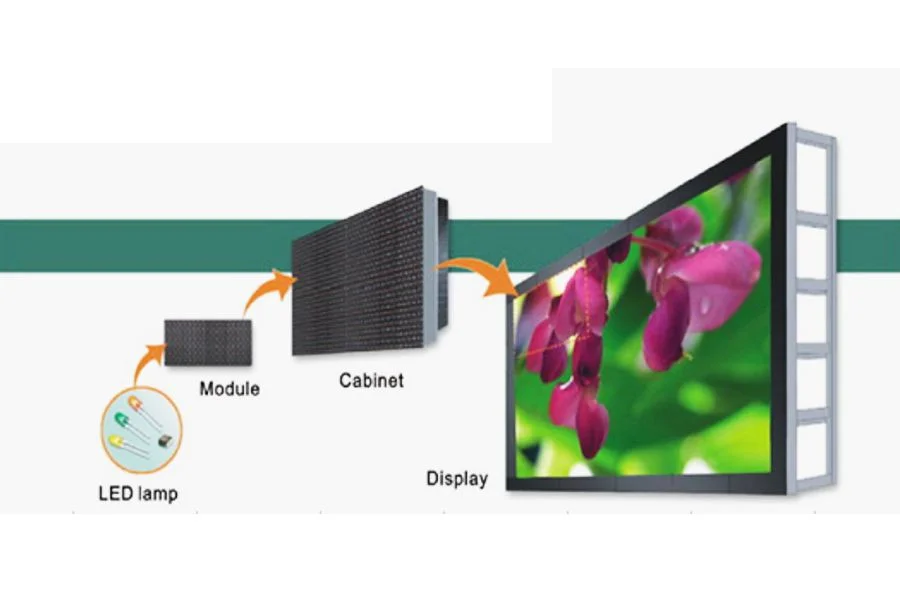
The dLED displays They are modular, allowing the creation of:
- Large video walls
- Seamless displays
- Custom-sized screens
♦For larger projects, LEDs offer much more flexibility.
Viewing distance
THE IPS It is best for close-up viewing, such as on monitors or TVs.
You LED displays They come with different pixel spacings, allowing adjustments according to distance, from a few meters to hundreds of meters.
♦LEDs adapt better to different environments.
Durability and Service Life
To the IPS screens They are designed for controlled indoor environments.
You disLED players They are built for extended use, including:
- External conditions
- Operating 24 hours a day, 7 days a week.
- Service life of up to 100,000 hours.
♦ For heavy-duty use, LED is more reliable.
Integration and Design Flexibility
To the IPS screens They come in standard formats.
You LED displays They can be:
- Wall mounted or freestanding
- Curved or wrapped in structures
- Transparent for integration with glass.
♦ LED offers more creative freedom.
Cost and Value
You IPS displays They are generally more affordable for small-scale installations.
You LED displays They have higher initial costs, but:
- They are more scalable for large installations.
- They offer greater long-term value.
- They perform better for advertising and branding.
♦ For commercial use, LEDs generally provide a better return on investment (ROI).
When does IPS make sense?
IPS technology is ideal if:
- You need a small screen for indoor use.
- You work with short viewing distances.
- Color accuracy is their top priority.
When LED is the best choice
LED lighting is ideal if:
- Do you need large or seamless screens?
- Your screen will be used in outdoor environments or with too much light
- Do you want flexible or customized designs?
- Their goal is visibility and impact.
Real-life comparison: IPS vs. LED in practical scenarios
Understanding the specifications is one thing, but what really matters is how these monitors perform in real-world environments. Here's how IPS and LED monitors compare in everyday use:
Use in the office or at home.
For desks, workstations, or personal viewing:
- IPS technology delivers crisp images and accurate colors even at close range.
- LED technology is generally unnecessary and excessive for this configuration.
♥ IPS technology is the practical and economical choice in this case.
Exhibitors for shops or shop windows
For screens behind glass or facing pedestrian traffic:
- IPS exhibits difficulties under sunlight and reflections.
- The LED maintains high brightness and visibility even during the day.
♥ LEDs offer superior performance in attracting attention and providing greater visibility.
Outdoor Advertising
For billboards or roadside advertising panels:
- IPS technology does not support high brightness or exposure to harsh weather conditions.
- The LED was designed for high brightness and durability in outdoor environments.
♥ LED is the only viable option for outdoor environments.
Large screens for events and Stages
For concerts, conferences, or live events:
- The IPS has limited size and visibility at a distance.
- The LED creates large, continuous images that are visible throughout the venue.
♥ LED is the industry standard for events.
Corporate entrance hall and video walls
For high-quality indoor and visual branding:
- IPS works well for smaller screens, but includes visible bezels.
- LED lighting offers frameless walls with greater visual impact.
♥ LED lighting is increasingly becoming the preferred option for modern and sophisticated spaces.
This type of side-by-side comparison usually makes the decision clearer: IPS works better for close-up personal viewing, while LED is designed for scale, brightness, and real-world visibility.
Conclusion:
IPS and LED are not direct competitors; they solve different problems.
But if your goal is to stand out, grow, and remain visible in any environment, LED displays are on another level.
Frequently Asked Questions (FAQ)
IPS (In-Plane Switching) is a type of LCD technology known for its accurate colors and wide viewing angles, commonly used in monitors, TVs, and mobile devices. LED displays, on the other hand, are self-emitting panels composed of individual light-emitting diodes, widely used in large-format applications such as billboards, stage screens, and commercial signage. IPS relies on backlighting, while LED displays generate their own light.
LED displays are significantly better suited for outdoor environments. They offer ultra-high brightness (typically 5,000 to 10,000 nits), weather resistance (IP67+), and long viewing distances. IPS displays are not designed for direct sunlight and typically have much lower brightness, making them unsuitable for outdoor advertising or public displays.
IPS technology is ideal for close-up viewing (e.g., desktops, control rooms, retail displays), where high brightness is required. pixel density This is important. LED displays are designed for varying viewing distances, from a few meters (fine-pitch LEDs) to hundreds of meters (large billboards).
It depends on the application. IPS monitors offer superior color accuracy, consistency, and detail at close range. LED monitors excel in brightness, contrast, and visibility at long distances or in bright environments. Modern thin-pitch LED monitors can now achieve high resolution, narrowing the gap for indoor use.
For small-scale and short-distance use, IPS displays are more economical. However, for large-format, scalable, and high-impact installations, LED displays offer better long-term cost-effectiveness due to their modular design, durability, lower maintenance requirements, and ability to cover large areas without bezels.