


We've seen how display technology has evolved rapidly. From traditional DIP LEDs to advanced Micro LED packaging, such as MIP, each technology offers unique advantages depending on the application.
Choosing the right LED technology isn't just about brightness or resolution; it directly impacts durability, maintenance, viewing experience, and long-term cost.
In this blog, we will detail the differences between DIP, SMD, GOB, COB, COG, and MIP, helping you to clearly understand which solution best suits your project.
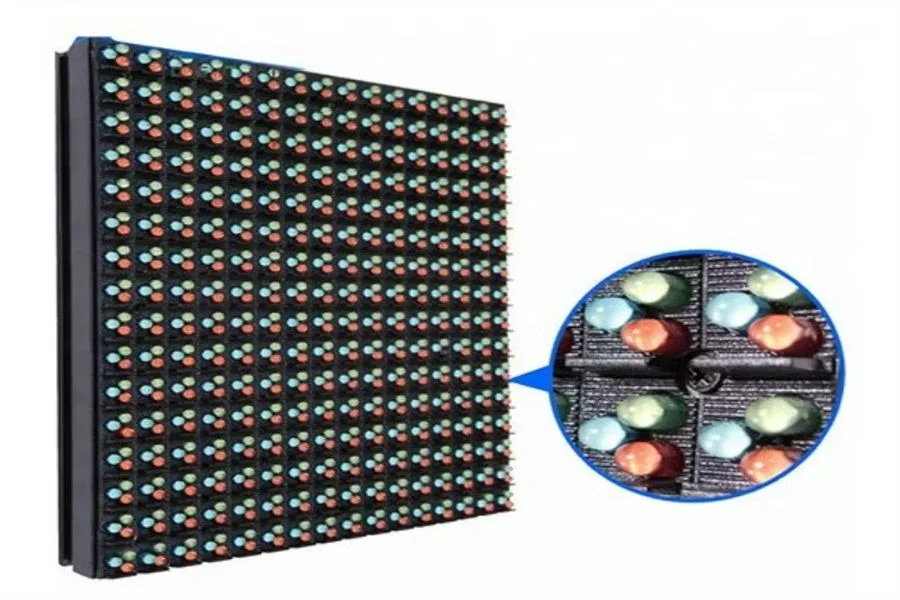
DIP (Dual In-line Package)
What is it?
DIP is one of the earliest LED packaging technologies, where individual LED lamps are mounted directly onto a printed circuit board (PCB).
Main features
- High gloss
- Strong water resistance
- Wide viewing distance
- Lower resolution compared to the latest technologies.
Best application
- Outdoors
- Roadway signage
- Displays for long-distance viewing
Our opinion
DIP is extremely durable and reliable for adverse external environments, However, it lacks the fine pixel spacing required for modern high-definition displays.
SMD (Surface Mounted Device)
What is it?
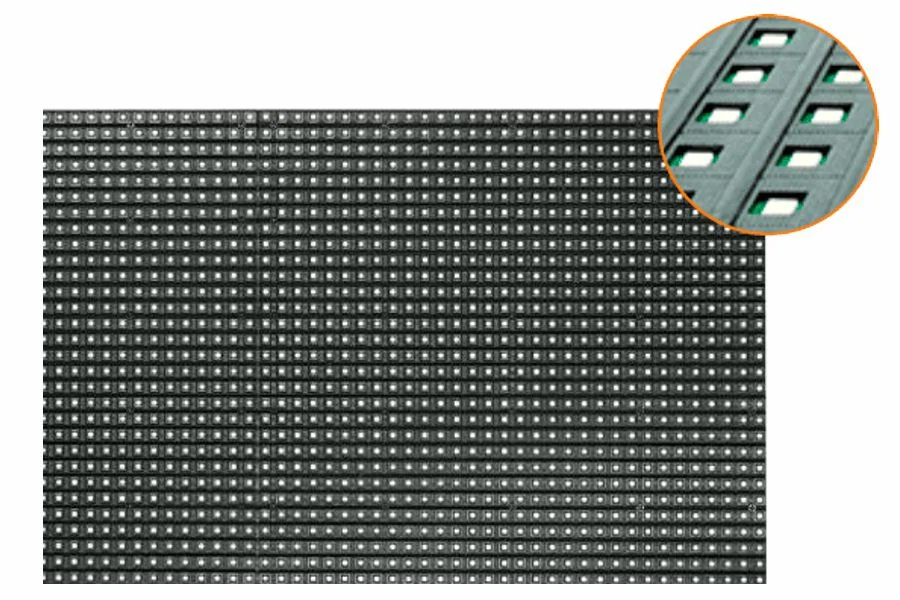
SMD technology integrates RGB diodes into a single package and mounts them directly onto the surface of the printed circuit board (PCB).
Main features
- High resolution and pixel density
- Wide viewing angles (up to 160°)
- Better color uniformity
- Suitable for indoor and outdoor use.
Best application
- LED screens for indoor use
- Exhibitors for stores
- Conference rooms
- Outdoor advertising (high-resolution displays)
Our opinion
Currently, SMD technology is the industry standard due to its balance between cost, performance, and versatility.
GOB (Glue on Board)
What is it?
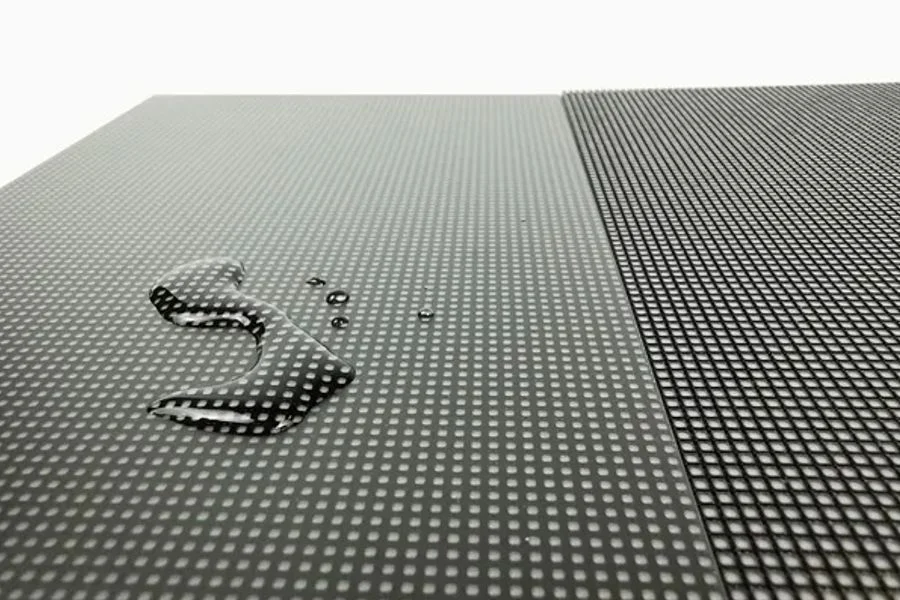
GOB is not a new type of LED, but rather a protective process applied to SMD LEDs using transparent epoxy glue.
Main features
- Waterproof, dustproof and impact resistant.
- greater durability
- Reducing dead pixels
- Maintains image sharpness.
Best application
- LED screens for rent
- Interactive displays
- High traffic areas
Our opinion
GOB technology significantly improves the lifespan and reliability of SMD displays, especially in environments where physical contact is unavoidable.
COB (Chip on Board)
What is it?
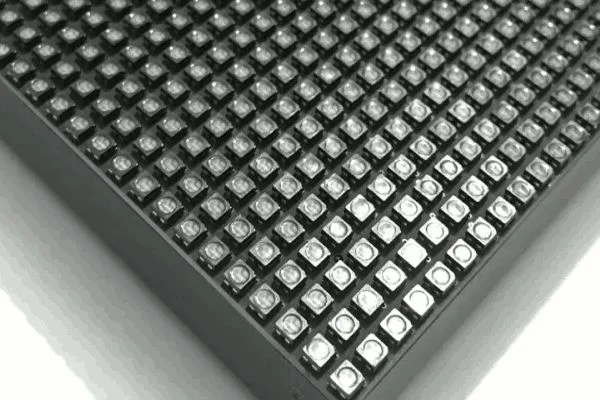
COB technology involves directly mounting LED chips onto a printed circuit board (PCB) without the need for traditional packaging, which is then achieved through encapsulation.
Main features
- ultra-thin pixel pitch
- Seamless surface (no visible gaps)
- Better heat dissipation
- High level of protection
Best application
- Control rooms
- Broadcast studios
- High-quality indoor monitors
Our opinion
COB technology offers a more refined visual experience and more robust protection, making it ideal for high-quality indoor applications.
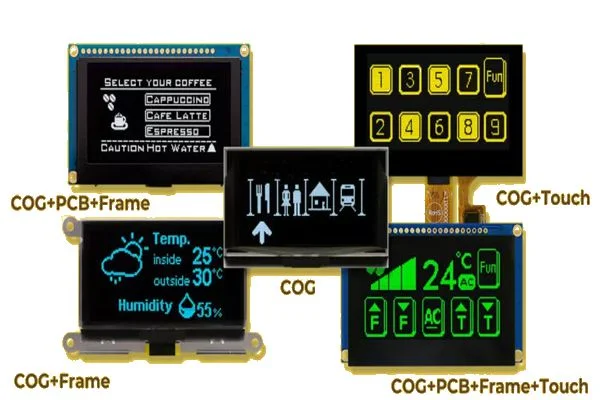
COG (Chip on Glass)
What is it?
COG mounts LED chips directly onto a glass substrate instead of a printed circuit board, resulting in thinner chips with less spacing.
Main features
- Ultra-thin and lightweight structure
- Reduced connection complexity
- Lower manufacturing cost for LCD modules
- High reliability for compact screens
Best application
- Transparent display cases
- Smart storefronts
- Creative installations
Our opinion
COG is still under development, but it demonstrates strong potential in futuristic and transparent display applications.
MIP (Micro LED in Package)
What is it?
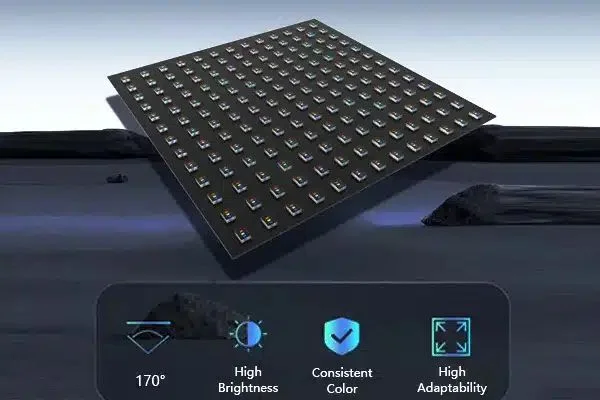
MIP is a newer method of packaging Micro LEDs, in which tiny LED chips are packaged in modular units and then assembled like SMD.
Main features
- It combines the performance of micro-LEDs with the flexibility of SMD.
- High brightness and contrast
- Longer lifespan
- Easier maintenance than COBs.
Best application
- High-quality commercial displays
- High-resolution LED panels
- Premium interior facilities
Our opinion
MIP technology bridges the gap between traditional SMD technologies and advanced Micro LED technologies, offering scalability and performance.
Overview of the main comparison
| Technology | Full name | Main structure | LED format | Repair |
|---|---|---|---|---|
| DIP | Through-hole mounting package | The LED terminals pass through the printed circuit board (PCB). | Large, protruding LEDs | Replaceable LEDs |
| SMD | Surface mount package | First, seal the LED chips → then, assemble them. | Individual LED chips | Possibility of repair at a single point. |
| GOB | SMD Packaging | SMD + Full board encapsulation | LED chips covered in glue | Difficult to repair |
| COB | Integrated chip | Direct mounting of the bare chip onto the PCB + complete board sealing. | Without independent LEDs | Not suitable for individual repair. |
| COG | Chip on glass | Bare chip mounted directly on a glass substrate | No LEDs, extremely thin | Not repairable |
| MIP | Miniature package | Chip transformed into micro LEDs → then SMT assembly. | Miniature independent LEDs | Single-point repair capability |
| Technology | Protection | Brightness/contrast ratio | Standard stitch step | Typical scenarios |
|---|---|---|---|---|
| DIP | Generally adequate | High brightness, low contrast | P6–P20 | Traditional outdoor displays, shop window displays |
| SMD | Susceptible to water damage and LED failure. | Generally | P1.5–P10 | P1.5–P6 Standard screens for indoor and outdoor use, for rental. |
| GOB | Good (waterproof and dustproof) | Medium, prone to reflexes. | P2–P4 | Rental for outdoor use, economical protective screen. |
| COB | Excellent | Very high quality, matte finish for eye protection. | P0.4–P1.5 | Command centers, high-level conferences, broadcasts |
| COG | General | Extremely high resolution, transparent screen | Below P0.3 | Micro LED, transparent screen, display close to the eyes. |
| MIP | Good performance | High level of black | P0.6–P2 | Large, small-pitch screens for commercial, educational, rental, and mass production use. |
How to choose the right technology
Based on our experience as manufacturers, the right choice depends on three main factors:
Environment
Outdoor projects require durability (DIP or GOB), while indoor environments benefit from higher resolution (SMD, COM, MIP).
Viewing distance
For close-up viewing, a finer pixel pitch is required; in this case, COB and MIP technologies offer the best performance.
Budget performance
SMD remains the most economical option, while COB and MIP offer premium results with a larger investment.
Final considerations
In LED display technology, there is no single solution that fits all cases. Each encapsulation method — DIP, SMD, GOB, COB, COG, and MIP — has a specific purpose.
We always recommend choosing the right technology for your specific use case, rather than simply opting for the most advanced option.
The ideal LED solution is not just about technical specifications, but about performance in real-world conditions.